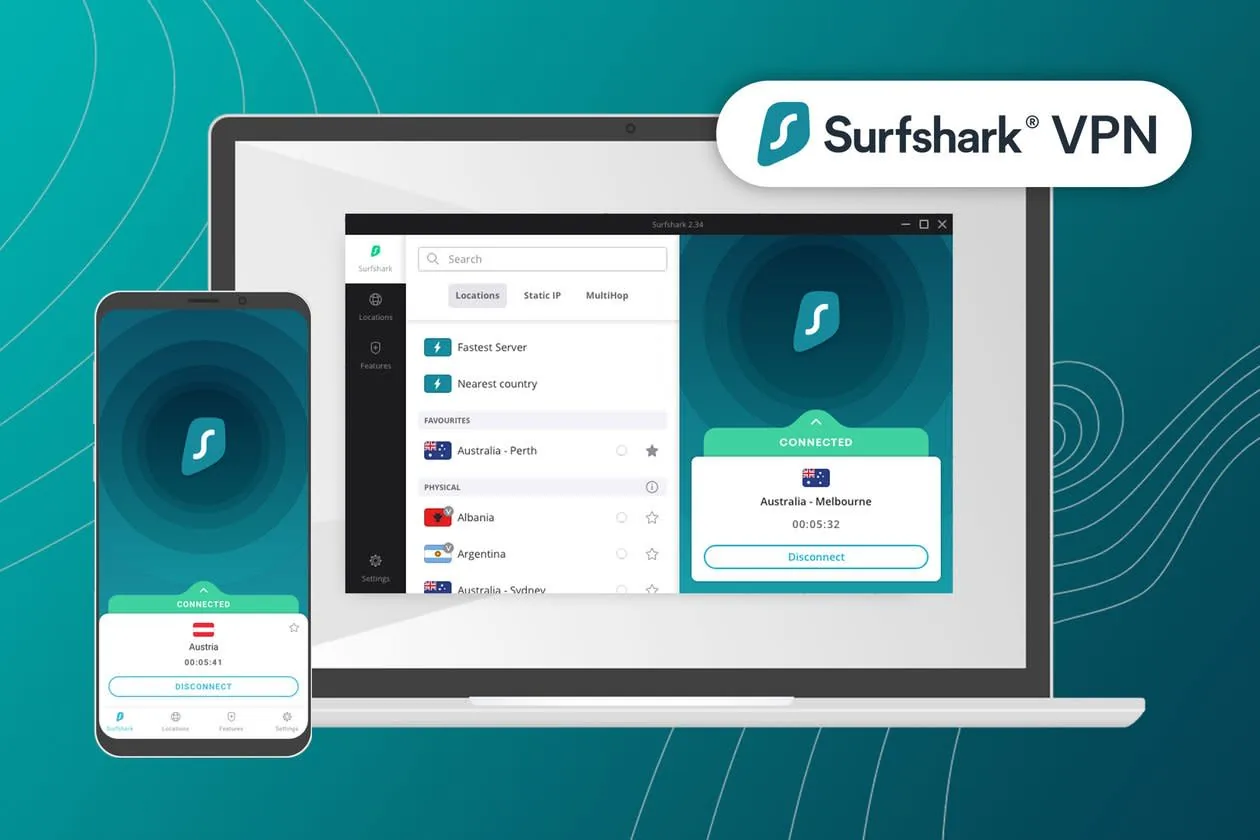
Why Surfshark VPN Fits Perfectly Into Modern Digital Life
Part of our complete Surfshark coverage — twelve articles, each answering a different question.
Most VPNs licence you a number of devices. Five is the usual figure, occasionally six or ten, and it made sense when a household had a laptop and a phone.
Count what is actually on your network now. Two phones, two laptops, a tablet, a television, a games console, possibly a router. The five-device limit stopped matching how people live, and Surfshark's decision to drop it entirely is the reason most people end up choosing it.
What unlimited actually removes
Not cost. Rationing.
On a capped plan you decide which devices deserve protection, and the answer is usually the laptop and the phone. The television streaming over a hotel network, the tablet the kids use, the console — those go unprotected, because disconnecting something else to cover them is friction nobody sustains.
Removing the cap removes the decision. Everything connects, stays connected, and you stop thinking about it. Protection people do not have to manage is protection that actually stays on.
Where it earns its place: the household
One subscription covering everyone in a house is a materially different product from one covering one person. Family members are not going to manage connection slots, and asking them to is how a VPN ends up used by one person in a household of four.
The router option extends this further — protect the router and every device behind it inherits the tunnel, including things that cannot run VPN software at all, like some smart TVs and IoT hardware. It costs more setup effort and it is the most complete answer for a fixed home network.
Where it earns its place: travel
Travel is where device count spikes and network trust collapses at the same time. Phone, laptop, tablet, e-reader, all on hotel and airport Wi-Fi you know nothing about.
This is the scenario capped plans handle worst, because it is exactly when you want everything covered. Public networks are shared infrastructure with unknown administration, and the sensible assumption is that the operator can see unencrypted traffic.
What it does not solve
Connecting many devices does not multiply your bandwidth. Everything shares your connection, and a VPN adds encryption overhead on top. Ten devices streaming simultaneously through one tunnel will feel it.
Nor does it protect the devices themselves. A VPN encrypts traffic in transit. It does not stop malware, and connecting an already-compromised device changes nothing about the compromise — a distinction we cover separately in VPN versus antivirus.
The trust question underneath
Unlimited devices routes more of your traffic through one provider, which makes that provider's honesty the whole question.
Surfshark's no-logs claim has been assessed by Deloitte, and its browser extensions and infrastructure have been audited by Cure53. Independent assessment is not a guarantee, and it is meaningfully better than a policy page asserting itself. It is worth knowing which providers have submitted to it and which have not.
Who this suits
Households rather than individuals. People who travel with several devices. Anyone who has ever disconnected one device to connect another and decided the VPN was more trouble than it was worth.
Bottom line
Unlimited connections is not a specification, it is the removal of a daily decision. That is why it changes whether a VPN gets used, and for a household it is the single feature that matters most.
Part of our full Surfshark coverage.