How Surfshark Helps You Browse, Stream, and Stay Private
Part of our complete Surfshark coverage — eight articles, each answering a different question.
The honest answer to what changes day to day is: less than the marketing suggests, and more than sceptics claim. Here is what is actually different once it is running.
On public Wi-Fi, the change is real
Hotel, airport and café networks are shared infrastructure administered by someone you cannot identify. HTTPS already encrypts the contents of most traffic, which is why public Wi-Fi is far less dangerous than it was a decade ago.
What HTTPS does not hide is which sites you connect to. The network operator still sees the destinations. A VPN moves that visibility from the café to your VPN provider — which is a real improvement only if you trust the provider more than the café, and that is a judgement about the provider rather than about VPNs.
Against tracking, it helps narrowly
Your IP address is one signal advertisers use. Masking it removes that signal.
It is not the main one. Cookies, browser fingerprinting, and being logged into accounts identify you far more reliably than an IP ever did. Run a VPN while signed into your usual accounts and you are identified by the accounts.
CleanWeb, Surfshark's ad and tracker blocker, does more of the practical work here than the tunnel does, because it blocks the tracking scripts rather than changing the address they see.
Streaming: the fragile use case
People buy VPNs to watch a different country's catalogue, and it works until it does not.
Streaming services detect and block VPN address ranges continuously. Any provider's ability to access any given service is a moving target measured in weeks, and anyone claiming permanent access to a particular platform is guessing. Treat it as a feature that may work today.
Expect a speed cost too. Encryption plus a longer route is slower than a direct connection, always. On a fast line the difference is invisible for streaming; on a slow one it can be the difference between HD and buffering.
What it does not do
It does not make you anonymous. It moves who can see your traffic, it does not remove visibility.
It does not protect against malware, phishing or a compromised device.
It does not hide activity from services you are logged into. Signing into an account tells that account exactly who you are, whatever your IP says.
The features that change daily use
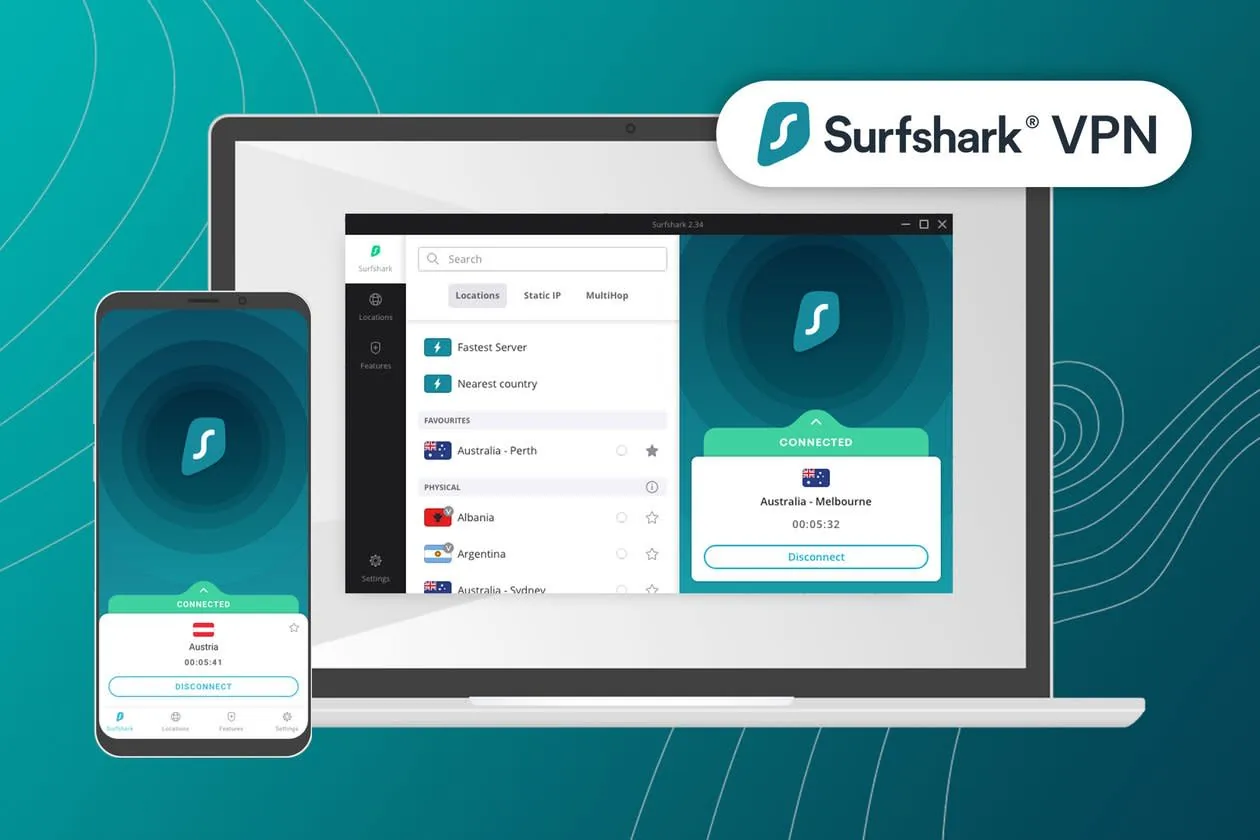
Bypasser, the split-tunnelling tool, is the one most people end up relying on — route some apps through the VPN and let others connect directly. Banking apps that dislike foreign IPs, and local services that break under a VPN, stop being a problem.
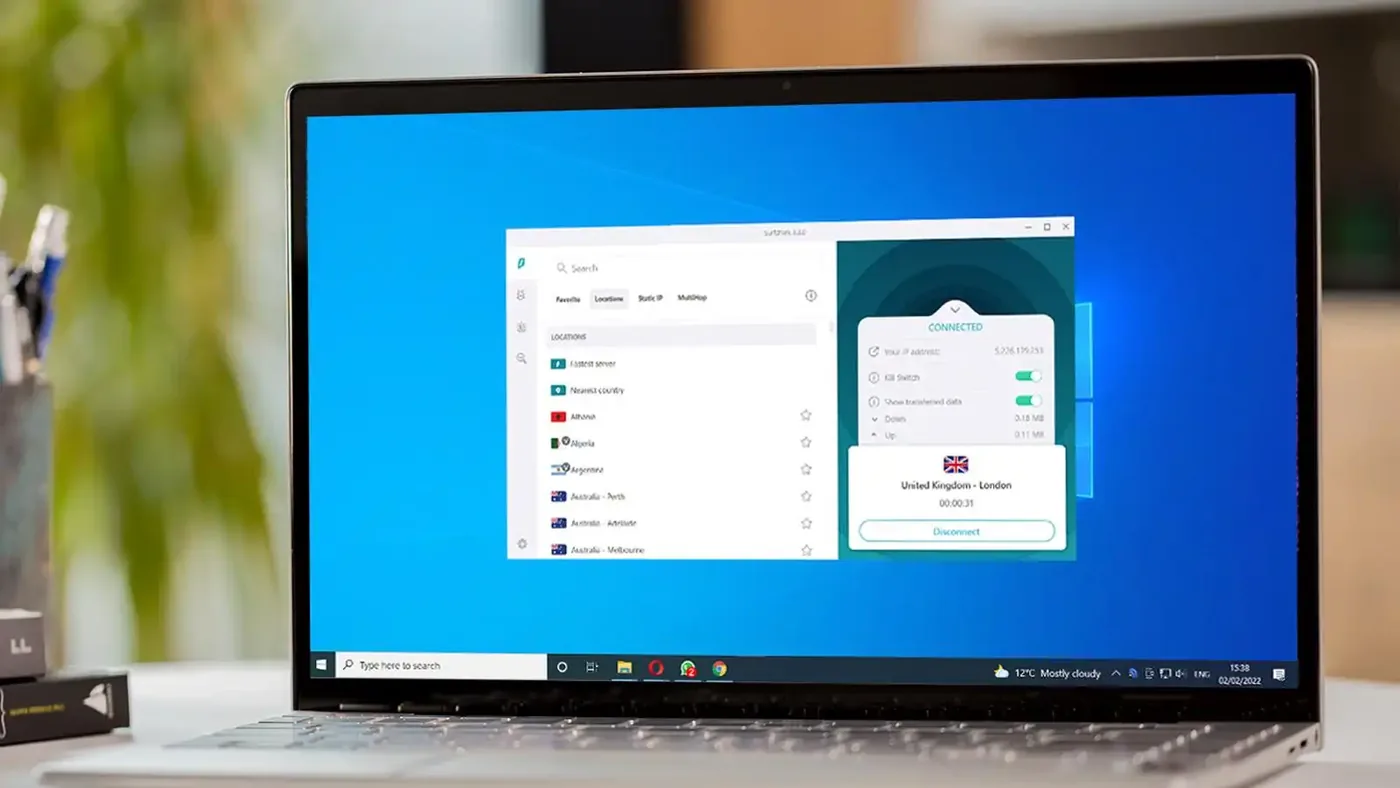
The kill switch cuts your connection if the tunnel drops, which prevents the silent failure where you believe you are protected and are not.
MultiHop routes through two servers for a second layer, at a further speed cost. Useful for a narrow set of threat models, unnecessary for most.
Bottom line
A VPN is a targeted tool: it changes who can observe your traffic. On untrusted networks that is genuinely valuable. As general-purpose privacy it is one component among several, and the honest framing is the one that says so.
Part of our full Surfshark coverage.