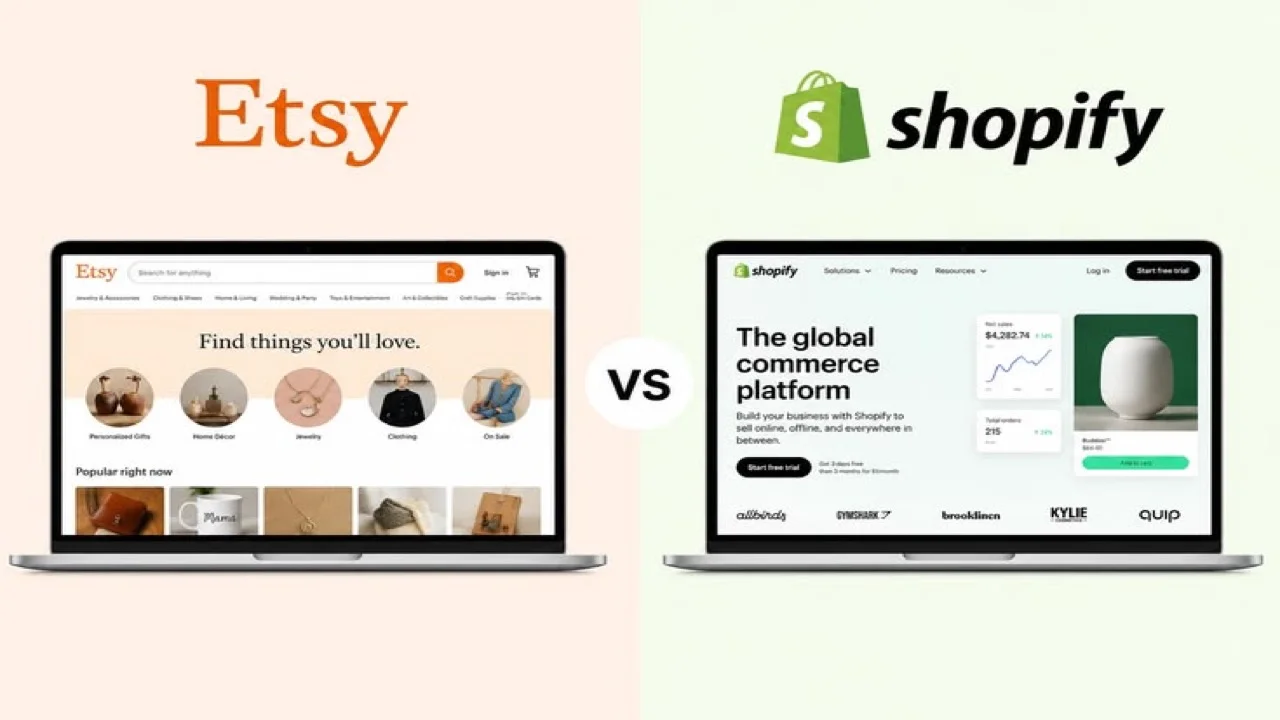
Etsy vs Shopify: Marketplace Traffic or a Storefront You Own
This comparison gets framed as a cost question and it is not. It is a question about who supplies the customers.
Etsy has buyers already searching. You pay per sale for access to them. Shopify gives you a storefront you control and sends you nobody — every visitor is one you found and paid for in time or advertising.
The actual trade
| Etsy | Shopify | |
|---|---|---|
| Who brings the buyer | The marketplace | You |
| Cost shape | Per listing and per sale | Monthly, plus per sale |
| Cost when you sell nothing | Listing fees only | The full subscription |
| Brand control | Constrained by the platform | Yours |
| Customer relationship | Mediated by Etsy | Direct |
| Competitors on the page | Shown alongside you | None |
| If the platform changes rules | You absorb it | Less exposure |
The row that matters most is the last-but-one. On Etsy, a shopper looking at your listing is shown similar items from other sellers on the same page. You are renting a stall in a market, and the market decides what sits next to you.
Why Etsy usually wins at the start
Because the hardest problem in e-commerce is not building a shop, it is getting anyone to visit it.
A new Shopify store is a well-built shop on an empty street. You will spend months or real advertising money before the first stranger arrives. Etsy hands you buyers on day one, and it charges accordingly. For validating whether anyone wants the product at all, that is the right trade almost every time.
Why Shopify wins later
Once you have demand you can generate yourself — an email list, repeat customers, a social following, a brand people search by name — the marketplace cut stops buying anything. You are paying a percentage for traffic you brought.
Owning the customer relationship is the substantive difference. On Etsy the buyer is Etsy's; you cannot freely email them or build a direct channel. That is fine while Etsy is the channel and limiting once it is not.
The answer most established sellers reach
Both. Etsy for discovery from people who did not know you existed, and a storefront for repeat buyers, higher-margin products and anything the marketplace's rules make awkward.
The real cost of running both is inventory synchronisation. Overselling the same stock across two channels produces cancellations, and cancellations damage you on the platform where ranking depends on your record. Solve that before launching the second channel, not after.
The honest caution about each
Etsy has repeatedly changed fees and advertising rules, and sellers have absorbed those changes without much say. Building a business entirely on it means accepting that exposure.
Shopify is a subscription you pay whether or not you sell anything, and the app costs stack on top — our piece on what the Shopify subscription actually buys goes through that. An empty store is a monthly bill.
Bottom line
Start where the buyers are; move once you can bring your own. Treat Etsy as customer acquisition you rent and a storefront as infrastructure you own, and the sequencing answers itself. Fee mechanics are in our breakdown of Etsy seller fees.
Etsy has revised its fee structure and advertising rules more than once. Percentages and thresholds are deliberately not quoted here — check the current Seller Handbook before pricing anything.